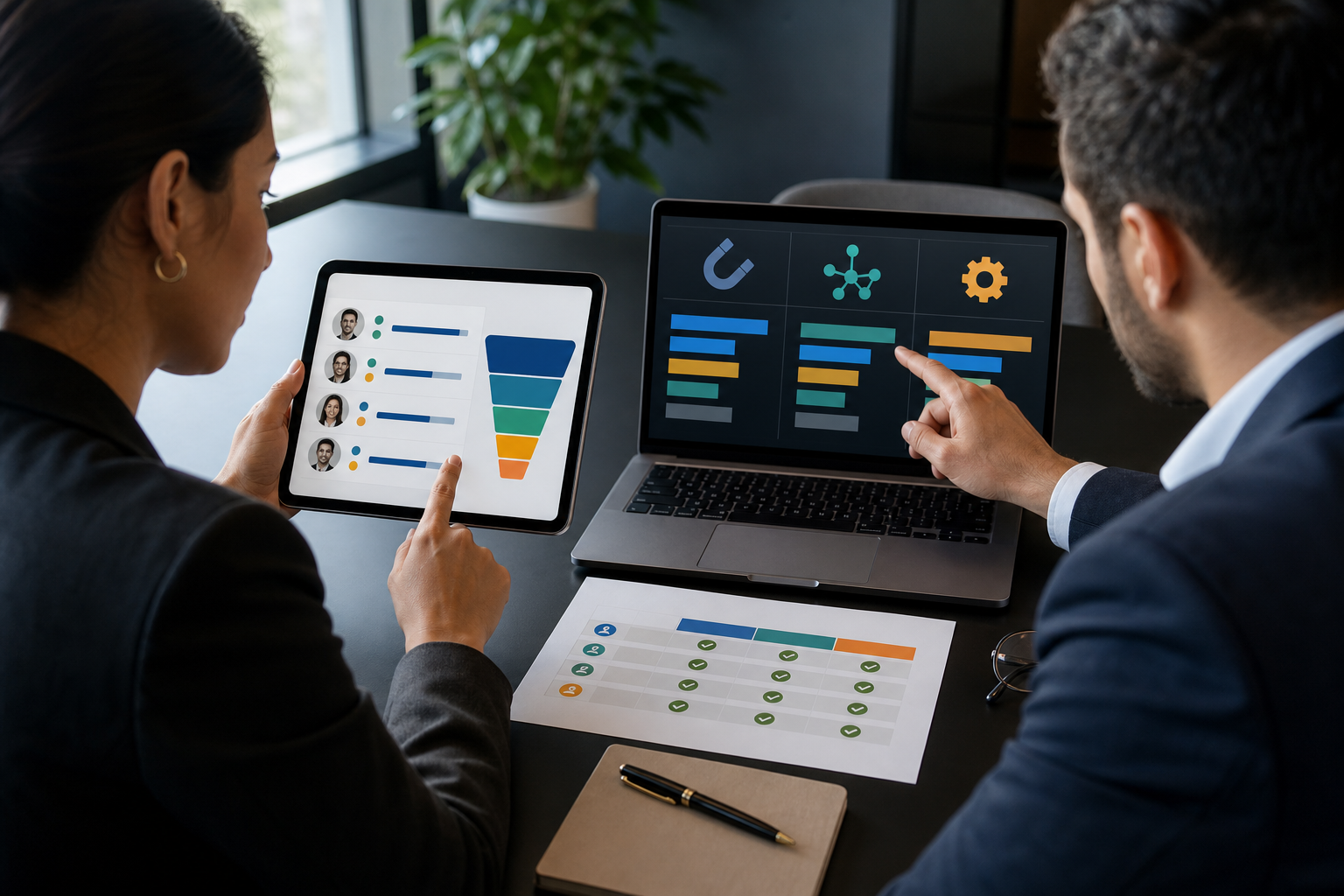
Most business owners treat leads like oxygen, until the campaign stalls and the inbox goes quiet. For Philippine companies selling to other businesses, that silence is expensive. B2B sales cycles are longer, decision makers are harder to reach, and one qualified meeting can be worth months of revenue. That is why B2B lead generation services are not a luxury, they are a practical channel for growth when structured correctly.
This article explains what those services actually deliver, how to pick a provider in the Philippines, the channels that work best with Filipino buyers, realistic performance benchmarks in pesos, and a compact 90-day pilot plan you can use to test providers without overcommitting.
What B2B lead generation services do and when you should hire them B2B lead generation services take responsibility for filling the top and middle of your sales funnel. They identify the companies and contacts that match your ideal customer profile, start outreach through chosen channels, qualify responses into marketing qualified leads and sales qualified leads, and hand off or nurture those leads until your sales team can close deals.
Hire external lead generation services when any of these apply:
- Your sales team spends too much time cold prospecting and not enough time closing.
- You need to enter a new city or vertical quickly, for example expanding from Metro Manila to Cebu or Davao.
- You lack the marketing content, tools, or data to run consistent outbound campaigns.
- You want predictable, measurable lead flow without hiring and training a new in-house team.
In the Philippines context, many small and medium enterprises find outsourcing attractive because local agencies or contact centers already understand business culture, language nuances, and regulatory requirements like the Data Privacy Act 2012.
How the process usually works A reputable provider will start with your Ideal Customer Profile and buyer personas, then map an outreach strategy. Core steps include:
- Data building and list enrichment, ensuring target company size, industry, and contact role are accurate.
- Campaign setup across one or more channels, supported by tailored messaging and landing pages or booking links.
- Qualification via scripted calls, email responses, or qualification forms, turning raw interest into an SQL your sales team can act on.
- Reporting and optimization, showing which messages and channels convert best.
Look for providers that document each step, share their scripts and sequences, and integrate with your CRM so nothing falls through the cracks.
How to choose a B2B lead generation services provider in the Philippines Choosing the right provider is less about flashy claims and more about method, evidence, and cultural fit. Ask targeted questions during vetting and verify claims with references.
Prioritize providers that can show relevant work in the Philippines or Southeast Asia. A lead generation campaign that worked for a US software firm might fail if messaging does not match local procurement processes and language usage. Request case studies that match your vertical and company size.
Evaluate their methodology. The strongest providers combine inbound and outbound tactics, use multi-touch sequences, and have a clear qualification framework. Avoid agencies that promise guaranteed closed deals without seeing your product, price, or sales process.
Pricing models vary. Common options include retainer, pay-per-lead, and hybrid models. A retainer gives steady resource allocation, while pay-per-lead ties cost to volume but often comes with stricter lead definitions and higher per-lead fees. For Philippine SMBs, a small retainer plus a performance fee often balances predictability and accountability.
Check compliance and data handling. The provider should be explicit about consent, data sources, and storage practices consistent with the Data Privacy Act. Ask where they source contact lists, and whether they perform opt-out handling.
Ask for sample scripts and reporting dashboards. Providers that share templates and KPIs upfront tend to be more transparent during the campaign.
Channels and tactics that perform well with Filipino B2B buyers Different channels reach different decision makers. Choosing the right mix depends on your product, price point, and the buyer’s role.
LinkedIn outreach performs well for mid to senior level decision makers, particularly for IT, professional services, and corporate procurement in Metro Manila and Cebu. Combine connection requests with short, personalized messages and a follow-up sequence that drives a meeting or demo.
Cold email remains effective when lists are clean and messaging is localized. Use subject lines that reference a clear business pain, and keep emails conversational. For companies targeting regional offices, mention the city—such as Quezon City or Mandaue—to increase relevance.
Teleprospecting via a local contact center can produce faster results for the Philippines because many procurement admins prefer phone conversations. Cebu and Clark have experienced BPO teams who can handle scripted qualification and appointment setting in Filipino and English.
Events and trade shows still convert well. PhilConstruct, the Franchise Asia Expo, and industry-specific conferences offer concentrated access to decision makers. Many providers combine event follow-up campaigns with digital outreach to maximize ROI.
Content marketing and SEO are long-term plays, useful when your sales cycle spans months. Producing localized case studies and landing pages that reference Philippine regulations, tax incentives, or local success stories helps search visibility and credibility.
Paid channels such as LinkedIn Ads and Facebook lead ads have a role, but expect higher cost per lead on LinkedIn and lower quality on Facebook for B2B. Test small budgets first and use retargeting to warm prospects before passing them to sales.
Measuring results, KPIs, and realistic benchmarks for the Philippines You cannot manage what you do not measure. For B2B lead generation services, focus on metrics that show progress through the funnel. Key metrics include:
- Cost per Lead (CPL): How much you pay for a marketing qualified lead. In the Philippine market, CPLs vary widely by industry and lead quality. Expect lower CPLs for mass-market services, around ₱300 to ₱1,000, and higher CPLs for senior-level leads in specialized industries, ₱2,000 to ₱8,000 or more.
- Marketing Qualified Lead to Sales Qualified Lead conversion: A healthy conversion depends on the qualification criteria, but a typical benchmark might be 30 to 50 percent.
- SQL to Closed Deal conversion: For complex B2B sales, conversion rates often range from 5 to 20 percent depending on deal size and product-market fit.
- Sales cycle length: Track time from first contact to decision. In the Philippines, procurement processes and budget cycles can add weeks or months. Expect 60 to 180 days for mid-market deals.
- Customer Acquisition Cost (CAC): Combine marketing and sales expenses divided by new customers within a period. Comparing CAC to average contract value or lifetime value shows if the channel is sustainable.
Do not chase vanity metrics. A high volume of unqualified leads inflates CPL without improving revenue. Focus on SQLs and closed revenue generated attributable to the campaign.
Realistic budget examples with numbers Here are three simplified scenarios showing how B2B lead generation services perform with Philippine pricing and conversion assumptions.
Small software firm targeting 10 SMEs per month Budget: ₱70,000 monthly retainer for an agency and teleprospecting, plus ₱10,000 in ad spend. Assumptions: CPL ₱1,500, 20 SQLs per month, SQL to close 10 percent, average deal value ₱150,000. Result: Two closed deals per month on average, revenue ₱300,000, gross return before salaries and product costs. This scenario shows how a moderate CPL can scale quickly if deal size is substantial.
Mid-sized industrial supplier expanding to Visayas Budget: ₱150,000 monthly retainer and list-building fee, ad spend ₱30,000. Assumptions: CPL ₱3,500 due to niche buyers, 40 leads per month, 25 percent become SQL, SQL to close 8 percent, average deal value ₱600,000. Result: Approximately three closed deals per month, revenue ₱1.8 million. Higher CPL is acceptable when average deal size and margins are strong.
Enterprise-focused consultancy pursuing government contracts Budget: ₱350,000 monthly for a combined research, LinkedIn outreach, and in-house SDR coordination, ad spend ₱50,000. Assumptions: CPL ₱8,000 because of senior public sector contacts, 60 leads for the campaign, 40 percent SQL, SQL to close 5 percent, average deal value ₱8 million. Result: One to two large contracts closed over a longer cycle, revenue ₱8 million to ₱16 million per successful deal. High upfront cost is justified by large contract values.
These examples illustrate that acceptable CPL varies with deal size. Always map CPL and conversion assumptions to your average contract value to understand payback period.
Common mistakes Philippine businesses make with lead generation services Companies commit avoidable errors that reduce campaign effectiveness. First, not aligning sales and marketing. If sales rejects leads but provides no feedback, the agency cannot optimize. Create a lead acceptance SLA and review it weekly during the pilot phase.
Second, poor data hygiene. Buying cheap lists without cleansing leads to undelivered emails and wasted calls. Insist on list sampling and verification before payment.
Third, unclear definitions of an SQL. A lead that is not ready wastes sales time. Set precise qualification criteria such as company size, budget range, decision authority, and timeline.
Fourth, expecting immediate results from content-driven strategies. If you need meetings within 30 days, favor targeted outbound outreach and events rather than an SEO-only approach.
A practical 90-day plan to test a lead generation service Month 1: Alignment and setup. Meet the provider to agree on ICP, metrics, scripts, and CRM integration. Provide your best case study and pricing structure. Run a small pilot list of 200 target companies across Metro Manila and Cebu.
Month 2: Multichannel execution and rapid iteration. Launch LinkedIn outreach, two email sequences, and phone follow-ups. Review weekly metrics: send rates, reply rates, SQLs, and call dispositions. Adjust messaging and ideal contact role based on early feedback.
Month 3: Scale the winning sequences. Double down on the channels and messages that converted, expand to new target cities or vertical niches, and begin handing off qualified meetings to sales. Establish a monthly reporting cadence with revenue attribution and a plan for continuous optimization.
Throughout the pilot, require transparency in reporting and a commitment to A/B testing. If the provider cannot show measurable improvements by the end of 90 days, you will either iterate specific changes or pause the engagement.
How to protect your investment and improve handoffs Integrate leads into your CRM with clear sources and timestamps. Build a five-touch sales cadence for new SQLs and commit to a response SLA, for example, contact a new SQL within four business hours. Track feedback from sales about lead quality and require the agency to act on that feedback within the next campaign.
Protect sensitive data by ensuring the provider executes a data processing agreement and uses secure storage. For projects involving government entities, require additional controls and staff vetting.
Final thoughts B2B lead generation services can transform the predictability of your sales funnel if you choose a provider that understands local markets, measures outcomes carefully, and integrates tightly with your sales team. Start with a focused pilot, align definitions and SLAs, and map costs to realistic deal values. With a disciplined approach, a steady stream of qualified meetings from Metro Manila to Davao can become a reliable growth engine for your company.