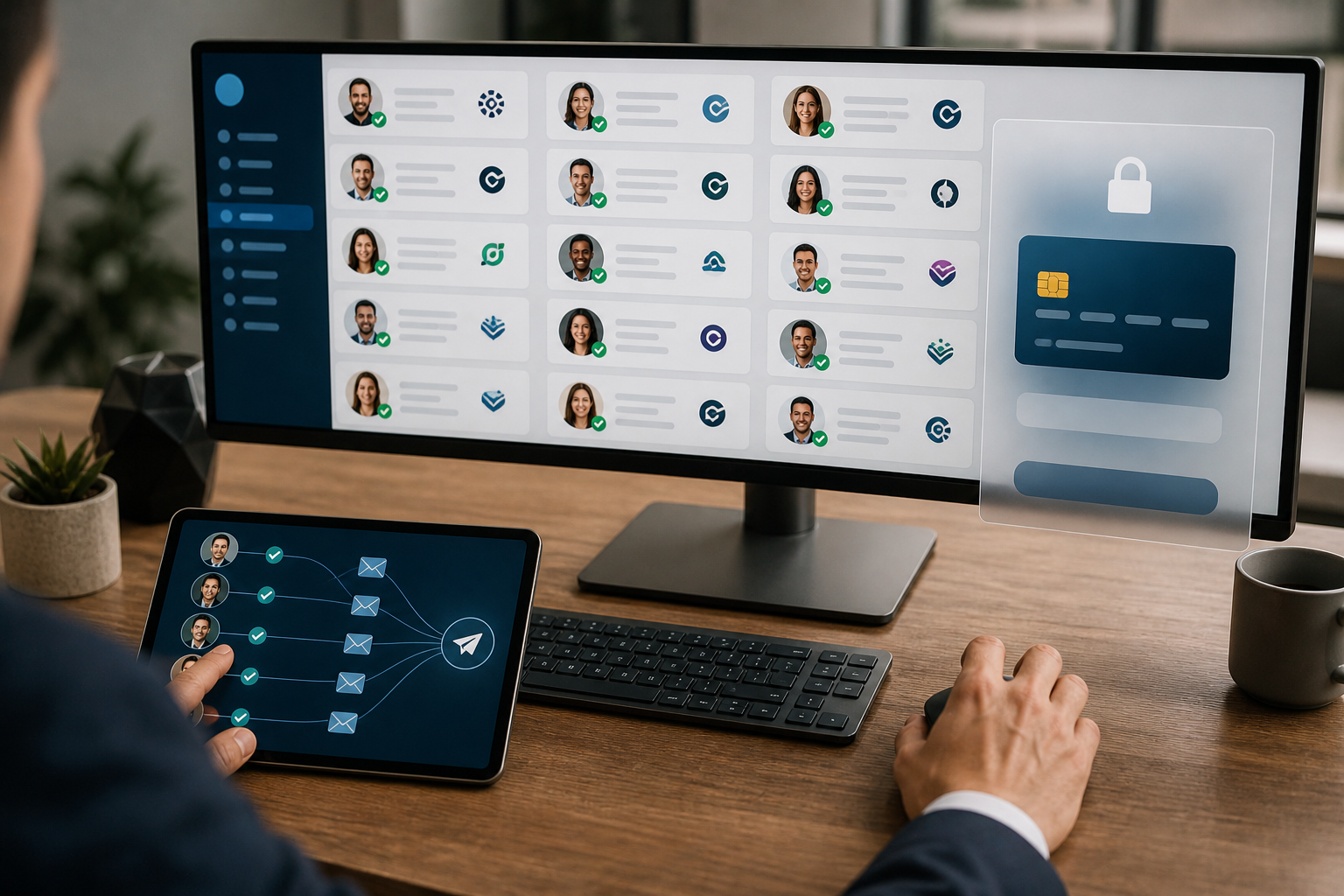
Many Philippine business owners treat LinkedIn as a passive brochure, a place to post company updates and wait. That approach leaves an entire pipeline of qualified leads untapped. LinkedIn sales automation services can change that, turning time-consuming prospecting into a repeatable, measurable process that supplies a steady stream of sales conversations without distracting your core team.
This article explains what LinkedIn sales automation services do, why they matter for companies in Metro Manila, Cebu, and Davao, and how to choose and implement them safely. You will find realistic pricing examples in pesos, a straightforward implementation timeline, and practical advice to protect accounts and maintain personalization while scaling outreach.
Why Philippine companies are ready for LinkedIn sales automation
LinkedIn is often underrated in the Philippines despite strong adoption among professionals. Decision makers at BPO firms, fintech startups, manufacturers, and regional branch offices regularly use LinkedIn to research partners and talent. For B2B businesses that sell services, software, or high-value equipment, LinkedIn offers a targeted way to reach purchasing managers and executives without the noise of other channels.
Manual prospecting on LinkedIn consumes hours each week: searching, profiling, connecting, following up, and logging contacts in CRMs. LinkedIn sales automation services take those repetitive tasks and turn them into a system. That system uses a combination of tools, templates, and human review to identify the right people, send personalized outreach, and sync responses into your CRM for follow-up by sales staff.
What LinkedIn sales automation services actually do
At a practical level, these services provide a blend of software, process design, and ongoing management. They typically perform these functions:
- Target list building: Create precise lists using title, company, location, industry, and keywords, refined to the Philippine market if needed.
- Sequence design and execution: Craft connection requests, follow-up messages, and InMail sequences timed to avoid over-contacting prospects.
- Personalization and A/B testing: Insert variables such as company name, mutual connections, and recent posts to keep messages relevant and to learn which messaging converts best.
- CRM integration: Push new leads, replies, and activity into your CRM or a shared sheet so sales reps can follow up quickly.
- Reporting and optimization: Provide weekly or monthly performance reports, show response rates, and recommend message or target adjustments.
- Account monitoring and safety controls: Limit daily messages, manage session origins, and apply manual review to avoid violating LinkedIn policies.
A high-performing service mixes automation with human oversight. Purely automated sequences without review raise the risk of poor messaging and account restrictions.
How LinkedIn sales automation services work in practice
Imagine a Manila-based software company that sells payroll automation to mid-market firms. A LinkedIn sales automation service would start by mapping ideal customer profiles, for example HR managers and finance heads at companies with 50 to 500 employees based in Metro Manila, Makati, and Taguig. The provider would then assemble a target list using LinkedIn filters, industry-specific keywords, and, where available, company size data.
Next comes outreach sequencing. The initial contact might be a short connection request mentioning a common industry challenge, followed by a value-focused message two to five days later. If there is no reply, the sequence sends a third message offering a one-page case study and an invitation to a short call. Replies are routed to the sales rep through the CRM. The provider tests variations of the opening line and the follow-up timing, reporting which version produces the best conversion from connection to call.
Companies that pair automation with thoughtful sales processes see better handoffs. When a lead replies positively, the automation pauses and a sales rep receives a notification to engage personally. This preserves the human touch where it matters.
Pricing and a simple ROI example with pesos
LinkedIn sales automation services in the Philippines typically fall into three tiers: basic, managed, and enterprise.
- Basic: ₱8,000 to ₱15,000 per month. This tier often includes list building, message sequences set by the vendor, and weekly reporting. It assumes your internal team handles follow-up.
- Managed: ₱25,000 to ₱60,000 per month. Managed services add message optimization, A/B testing, CRM integration, and a named account manager who monitors outreach and handles replies.
- Enterprise: ₱75,000+ per month. Enterprise services include custom integrations, advanced data enrichment, multiple account management, and SLA-backed lead delivery.
Example ROI calculation. Assume a managed service at ₱40,000 per month. The service targets 300 prospects per month, achieving a 20 percent connection rate and a 10 percent conversation-to-qualified-lead conversion. That produces six qualified leads monthly. If your average deal size is ₱250,000, and conversion from qualified lead to closed sale is 20 percent, you close about 1.2 deals every month, or roughly one deal per month on average, yielding ₱250,000 in revenue. In this scenario, the service cost at ₱40,000 produces a revenue lift of ₱250,000, delivering a strong payback if margins and cost of sale support it.
Adjust the numbers to fit your business. Lower volume, higher average contract values, or better follow-up will change the outcome. The crucial point is to track real conversion rates instead of assuming automation alone will close deals.
Choosing the right provider in the Philippines
Look for vendors who demonstrate experience with Philippine markets and who can show measurable outcomes. Ask these questions during evaluation:
- Can you show anonymized case studies from clients in the Philippines or Southeast Asia?
- How do you protect LinkedIn accounts and reduce the risk of restrictions?
- How do you personalize at scale while preserving a human touch?
- What does the onboarding process look like, and how long will it take before we see results?
- How do you integrate with our CRM or workflow tools like HubSpot, Pipedrive, or Zapier?
- What reporting do you provide, and how frequently?
Local context matters. A provider that understands the nuances of addressing Filipino decision makers, such as common job titles and working hours, can help you craft messages that feel natural. Verify references from businesses similar to yours, for example a Manila fintech talking to other fintechs, or a Cebu IT services firm selling to Australian clients via local LinkedIn outreach.
Account safety, compliance, and ethical considerations
LinkedIn has rules against certain automated actions. Violating those rules can lead to account restrictions, functional limitations, or even permanent bans. Protect your accounts by insisting the vendor follows plain safeguards: limit connection requests per day, randomize message timing, avoid mass invitation exports, and use legitimate login practices that do not hide geographic session data.
Prefer services that include manual review and human-in-the-loop checks for message content. Avoid providers that promise thousands of automated connections every week. For large-scale outreach, ask whether the vendor uses LinkedIn-approved APIs and verify their compliance approach.
Keep messages respectful and relevant. Overly aggressive pitches, repeated messages after a clear "no", or scraped profiles used without enrichment harm reputation and reduce long-term effectiveness. Focus on building conversations, not just collecting numbers.
Implementation timeline and what to expect
A clear timeline reduces surprises and helps you set internal expectations. A typical rollout looks like this:
- Week 1 to 2: Discovery and targeting. The vendor and your team define ideal customer profiles and map target titles and industries. You approve message templates and integration points.
- Week 2 to 4: Setup and warm-up. The provider configures accounts, connects to your CRM, and begins a cautious warm-up phase to establish activity patterns and avoid detection.
- Week 4 to 8: Testing and optimization. The vendor runs multiple message variants, adjusts targeting based on initial response, and begins regular reporting.
- Month 3 onward: Scale and refine. With proven sequences and reliable follow-up processes, you scale volume, introduce new segments, and refine messaging around what works.
Treat the first two months as learning rather than immediate scale. Expect lower conversion early on while lists and messages are optimized.
Best practices to keep outreach human and effective
Automation must support, not replace, thoughtful salescraft. Keep these principles in mind:
- Personalization wins. Use a short sentence that references a prospect’s role, recent post, or industry pain. Profiles that look mass-targeted get ignored.
- Respect time zones and working hours. In the Philippines, midday and late afternoons often work best for responses because many decision makers check LinkedIn during breaks or after meetings.
- Short messages outperform long ones. Start with two to three lines that communicate relevance and invite a brief next step.
- Fast follow-up matters. Route replies to a named sales rep and aim to respond within 24 hours. Automation should alert humans to take the conversation forward.
- Measure the right metrics. Track connections, reply rates, qualified leads, booked meetings, and closed deals, not just raw outreach volume.
Examples and use cases for Philippine businesses
A BPO company in Makati targeted talent acquisition heads in Australian and Singapore-based firms that outsource recruitment. The LinkedIn sales automation service created a sequence that referenced shared problems like high hiring costs and slow time-to-hire. Within three months the BPO booked five pilot projects worth an average of ₱180,000 each.
A Cebu software consultancy used automation to reach product managers at e-commerce companies across Southeast Asia. By integrating responses with HubSpot, the sales team followed up with personalized demos, increasing demo-to-contract conversion by 30 percent compared with cold emailing.
A Davao-based manufacturer used LinkedIn automation to find distributors in Mindanao and Visayas. They combined short, localized messages with a downloadable product sheet, closing two distribution agreements in six weeks that expanded regional reach.
Common pitfalls and how to avoid them
Many problems occur because businesses skip internal alignment. Sales reps sometimes ignore leads coming from automation because they do not see the value or because handoff procedures are unclear. Fix this by mapping the process end to end, assigning clear lead ownership, and agreeing on SLA response times.
Another pitfall is over-automation. If you rely on templates without variation, prospects sense the pattern and respond less. Schedule regular reviews of messaging and require human approval for template updates.
Finally, do not treat automation as a set-and-forget tool. Continual testing, messaging refreshes, and new segment experiments are necessary to sustain performance.
Measuring success and iterating
Create a dashboard with a few core KPIs: number of targeted contacts, connection rate, reply rate, qualified leads, meetings booked, and closed deals. Review performance weekly in the first two months, then monthly once processes stabilize. Use A/B testing to try different openings, value propositions, and follow-up timing. When a variation performs better, roll it out across similar segments but always monitor for long-term drift.
Short closing thought
LinkedIn sales automation services are not a shortcut to instant sales, they are a way to professionalize outreach, reduce wasted time, and create predictable lead flow. For Philippine businesses that sell B2B, adopting a thoughtful, safety-first automation approach can accelerate growth across Metro Manila, Cebu, and beyond. Start with a clear target profile, choose a provider that balances automation with human oversight, and treat the first months as an optimization period. With measured investment and disciplined follow-up, you can convert LinkedIn conversations into meaningful revenue.